Wednesday, 11 January 2017

10 January – Galveston

Today we were meant to have a mobile service technician take a look at the coach batteries. The house runs off 2 deep cycle batteries, but they are overheating and not holding their charge. So we had a relaxed morning, walking, reading and getting the laundry done. By 1pm he hadn’t shown up, so we rang to be told that he was held up and wouldn’t be here til tomorrow. So we headed into the downtown area to look around. 

Our first stop was the Moody Mansion. The Moody's established one of the great American financial empires. Based on cotton, it grew to include banking, ranching, insurance and hotels. The Moody’s even bailed out Conrad Hilton during the depression and enabled him to go on to create his wealth in the Hilton Hotel chain.


The mansion was built in 1895 with no expense spared and has 31 rooms over 4 levels. The audio guided tours only covered 20 of the rooms over 2 levels, but it was still quite lengthy. The mansion was put up for sale after a hurricane in 1900 which devastated Galveston and killed up to 8000 people. The Moody family purchased it for $20,000 when it’s worth at the time was around $100,000, and they lived in it for 80 years. The hurricanes over the years have caused damage to the house that has required many tens of millions of dollars in repairs, so it is wonderful to see the house still maintained and as beautiful to look at today as it was in the early years. The rooms are decorated with original Moody family furniture, art and artifacts and it was a lovely experience.


We drove around the downtown area for a while but had no luck finding a park for the RV, so will go back on the scooter. A delicious dinner at a Japanese restaurant finished the day.


Monday, 9 January 2017

9 January – Galveston

Up early for the 45 minute drive to Houston and the Johnson Space Centre, home to NASA.s Mission Control. As we parked up we could see the Shuttle transport plane with a shuttle replica mounted on its back.

 The complex is expansive, so the first thing we did was hop on a tram tour that takes you behind the scenes of the Space Centre. It has the look of a university complex, lots of fairly ordinary buildings, but housing NASA’s ongoing work. 


First stop was the historic mission control building, where NASA ran 9 Gemini and all the Apollo missions including the historic Apollo 11 trip to the moon and the final Apollo 17 trip. The control room has been restored with all its original fixtures and fittings and it was really interesting to sit in the press and VIP gallery and look out over the equipment. We learned that today's smart phones have enough processing power to run all of the Gemini and Apollo missions simultaneously and still have some processing power left over.


Next tour stop was the Saturn V warehouse. Massive, huge, unbelievably big – no words can really capture what it is like to be dwarfed by the Saturn V, the most powerful rocket ever built, and used for the Apollo missions. Over 36 stories tall, this is one of the original Saturn Vs and is kept in a climate controlled warehouse to keep it from deterioration. Even horizontal, its quite awe inspiring to look at. The 5 engines create 7.5 million pounds of thrust and chew through their 2200 tons of fuel in just 2 and a half minutes as they accelerate to 6500 miles an hour before Stage 1 was jettisoned. Stage 2 burned for 6 minutes before jettison, and at that stage the rocket was travelling at 15,000 miles an hour. Stage 3 put the final capsule into orbit at 17432 miles an hour.


After the tram tour we watched a short film introducing the history of the space program. Interestingly they didn’t shy away from the two shuttle disasters, but handled them very respectfully. It was very sobering to see the film from inside mission control as the Challenger disaster happened. The shock and sorrow was evident.

Next stop was the Starship Gallery with displays of the major types of capsules and modules used in the missions. There was a walk through of the training mockup of Skylab, and close up viewings of the Gemini, Mercury and Apollo modules. They didn’t give the astronauts much space!


Outside we climbed to the top of the Boeing with the shuttle on it’s back that we had seen when we arrived. We were able to go inside the shuttle and view the flight deck and payload bays and then inside the plane to see the many modifications made to transport the shuttle.


Following the shuttle display we went to the International Space Station section, which gave really interesting insights into life on the station.

Final stop was the movie Journey to Space, which recapped the space program to date, and also gave an in depth insight into the plans for Mars expeditions, planned for the mid 2030s using the new Orion spacecraft. Orion is the new deep space technology and has already commenced testing in 2014. The first mission will be unmanned and will go out past the moon, the second mission will follow the same path, but with a crew and the third mission will be to an asteroid in the 2020s.


After a full on day, we are back at camp on Galveston Island. 

Sunday, 8 January 2017

8 January – Victoria – Galveston

We woke up to find it was -5C INSIDE the van. Brrrrrr! Lucky the furnace got things to a more normal temp pretty quickly. We took the coast route from Victoria to Galveston Island, passing fat horses and longhorned cattle eating from big round hay bales, nodding donkeys everywhere – seems like every landowner has sunk an oil well or two – and travelling through seaside towns and over causeways. Lots of refineries and chemical plants too.

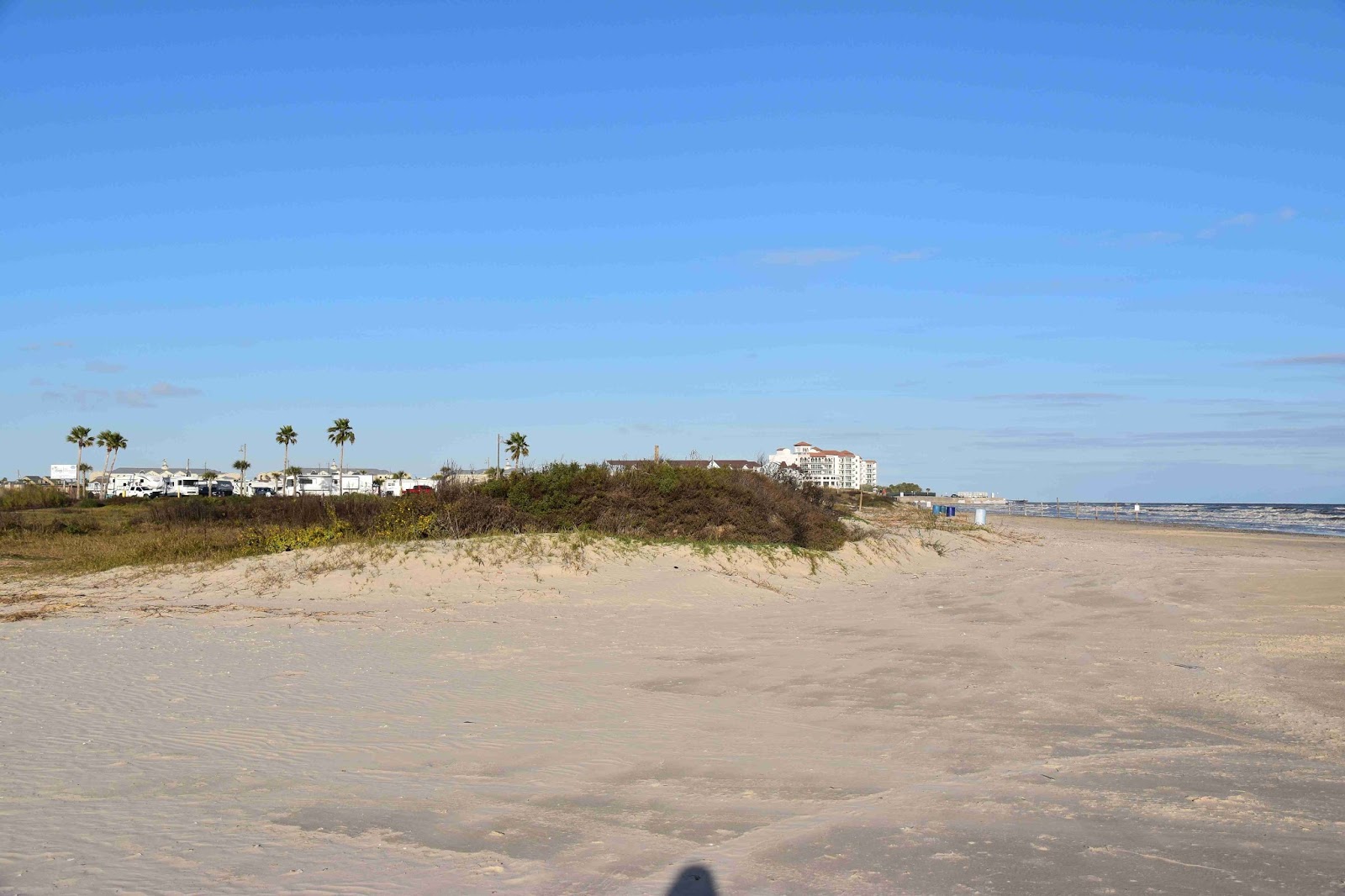
We arrived in Galveston mid afternoon and found a great RV Park right on the beach side of the island. Set up with time to spare for a walk on the beach to get pics, and also fit in a quick workout (needed it after spending several days on the road!)


Click the link below to see where I am located.

 If the above link does not work, try this link:

Saturday, 7 January 2017

7 January – Port Isabel – Victoria

The day was still cold and windy, but not cloudy as we hit the road towards Houston. Leaving Port Isabel we did a lap around the town to see the lighthouse, which was scaffolded up and undergoing repair work.

The drive was long and fairly uninteresting. We went through a border security stop where they were pulling everyone over for a K9 inspection. One of the guards had a quick chat with us while the dog handler went over the van and then we were on our way again.

We are parked up at Victoria and tomorrow we head for Houston. Tonights temp is going to be 24 degrees Farenheit –  about minus 5C. Texas temperatures have been interesting – ranging from 25 - 28C to as low as 5 or 6C as a top temp. It seems that the temps are quite warm, then a cold front sweeps through and drops them to freezing for a few days. Bit like Tasmania really.

Click the link below to see where I am located.

 If the above link does not work, try this link:


6 January – Port Isabel

We woke up to freezing winds and sea fog blasting across the water. Being an inside sort of day, we went to the Port Isabel museum complex. Firstly the Port Isabel Historical Museum, with one of the largest collections of Mexican artifacts from the US Mexican war. The museum is in a historical building that used to be the town general store and has a fish mural across the front façade that was painted by a local fisherman in 1906.


Port Isabel was first settled by the Spanish in 1523, but the settlement was abandoned not long after. A small fishing village was on the site from the 1770s and there was a fort established in 1845 due to a dispute about the location of the Mexican border. The fort was a significant outpost during the war with Mexico from 1846-48. The California Gold Rush brought prosperity, with prospectors arriving by boat, buying their supplies here and then travelling overland to California. In the 1950s and 60s the town was known as “the shrimping capital of the world”.

Our next stop was the Treasures of the Gulf Museum, focusing on 3 Spanish ships that sank in 1554 approx 30 miles to the north of Port Isabel, carrying cargo of gold and silver. To date 2 of the wrecks have been salvaged, with one remaining the subject of treasure hunts even today. Most of the 200 survivors of the wrecks were killed by natives as they attempted to find their way to civilisation, with only 2 making it. The museum had some samples of the silver the ships were carrying. Instead of bars they are irregular shaped discs of silver made by simply pouring the molten silver onto the ground in puddles.

We then drove over the 2.6 mile long causeway to South Padre Island. The bridge portion of the causeway had its own “Tasman Bridge” style collapse in 2001 when a barge hit the bridge, bringing down 3 spans of the bridge and causing 8 vehicles to fall into the water.


South Padre Island is a sand barrier island that stretches for miles along the coastline. The island is built up like Surfers Paradise at the south end, but as we drove north it is pretty deserted. We headed north for a while, with the pounding surf on one side, and dunes and the relatively calm lagoon on the other. Driving back, we stopped in at the Sea Turtle centre, where they rehab injured turtles before releasing them back into the ocean. Most of the tanks were covered over with insulation to keep them warm, but there was a baby turtle in an inside tank and two tanks with viewing windows.


Coming back over the causeway the wind had really picked up and we had a bit of trouble with the RV awning unravelling. We couldn’t pull over, so had to keep driving. No major dramas as the wind was blowing the awning up onto the van roof, so once we got back to the RV park we were able to secure everything again. 

 Click the link below to see where I am located.

 If the above link does not work, try this link:

5 January – San Antonio – Port Isabel

We headed south, towards the Mexican Border and the Gulf coast  - about as far south as you can go in the US. It was a long drive, about 5 hours, through scrub-lands that eventually gave way to newly ploughed up cotton fields stretching to the horizon. Texas is pretty flat! We passed a navy airbase with a fighter jet mounted on a pole on the roadside, but whipped past it too quick to get a photo. The speed limit was 75 mph – 121 kph.


Finally the roadside soils started to look sandy, and the highway median strip was planted with palm trees. Passing through Brownsville we saw a shipyard with a partially dismantled aircraft carrier and several oil rigs, and a flashing highway sign that said “Beware of the Pelicans”.

Driving into Port Isabel, our home for the next couple of nights, it gives the impression of a sleepy fishing village. The RV Park is on a canal and we went for a quick walk to stretch the legs, spotting pelicans lazily circling or perching on the docks next to the fishing boats. They got excited when we walked to the dock and a crowd of them gathered at the waters edge. We soon spotted why they were suddenly so keen to meet us – the fish cleaning station was right there and they are no doubt used to scooping up the fish guts that get lobbed into the water. Sorry to disappoint them! They are smaller and darker than the pelicans we are used to, and have a bit of a crest on their heads.


We are looking forward to exploring the historic Port Isabel and nearby South Padre Island.


Wednesday, 4 January 2017

4 January – San Antonio

We caught the no 24 bus into Downtown San Antonio to visit the Alamo. The church and the barracks are all that is left of the compound. The Alamo was a pivotal point in the Texas revolution and although the battle for the Alamo was lost, it proved to be a rallying point for the rest of the war, resulting in the independence of Texas from Mexico in 1936. Texas became a State of America in 1845, and the Alamo compound was used as a supply depot until 1878. After that, the Alamo was used as a warehouse until it was acquired as a shrine to the Alamo Defenders. Amongst the Defenders were Davy Crockett and James Bowie (the famous knife fighter). Outnumbered 10 to 1, they fought the Mexican troops for 13 days until the garrison fell and all the men were slaughtered. Far from discouraging the Texans (as the Mexicans had hoped) the Alamo became a legendary rallying cry “remember the Alamo”! and represents the ultimate sacrifice for freedom.


After a relaxed lunch we took a hop on hop off tour bus that does a city circle with commentary from the driver. We then spent the afternoon walking the famous River Walk that meanders along the San Antonio River for 14 miles. We did the downtown loop, that has shops, restaurants, bars and cafes lining the banks. They have done a wonderful job of the River Walk, its well paved with statues, fountains and murals to look at as you walk. It was a cold day, so we didn’t have any trouble with crowds.


We diverted off to explore La Villita – the Village – a district of historic cottages containing art studios and shops. Very pretty and lots to see.